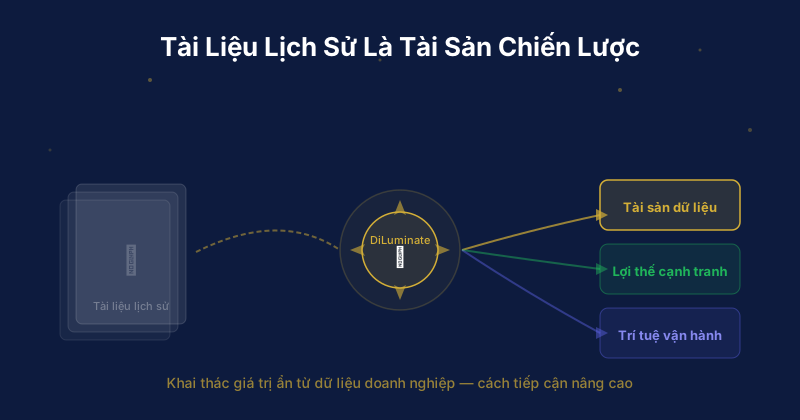
Your longest-tenured competitor has something you do not: 20 years of operational history that tells them exactly which customers churn, which contracts get renegotiated, which suppliers fail, which products succeed, and why. That knowledge is embedded in their documents. The question is whether they can read it.
The Sleeping Giant in Your Archive
Every business accumulates a record of everything it has ever done. Every contract negotiated. Every invoice issued. Every customer complaint. Every supplier agreement. Every personnel decision. Every regulatory filing. This archive is, in a very real sense, the institutional memory of your business — and it contains patterns that took decades and enormous cost to generate.
For most businesses, this institutional memory is inaccessible. It exists physically — in filing cabinets, storage rooms, offsite archives — but it cannot be queried, analyzed, or put to work. It is knowledge locked in a format that humans cannot efficiently process at scale.
The Value Pyramid
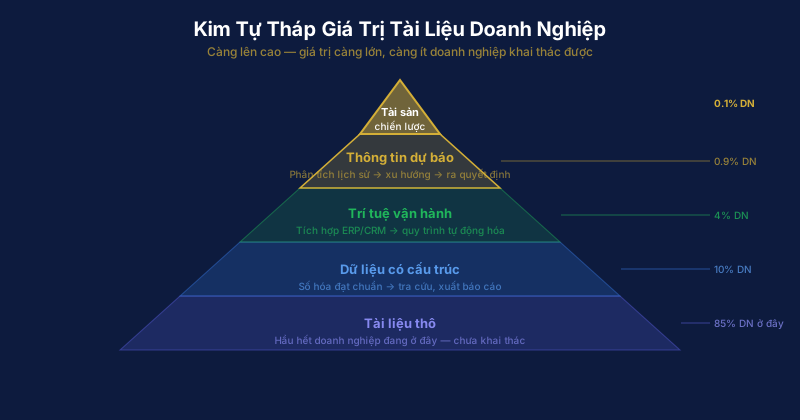
Not all document value is equal. Think of it as a pyramid with five levels:
- Level 1 — Raw Documents: Physical or scanned paper. 85% of companies are stuck here. No value extraction possible.
- Level 2 — Structured Data: OCR-extracted, searchable digital records. Basic retrieval and reporting enabled.
- Level 3 — Operational Intelligence: Data integrated into ERP/CRM. Automated workflows triggered. Day-to-day efficiency gains.
- Level 4 — Predictive Insights: Historical patterns analyzed to predict future outcomes. Pricing models, risk models, churn models.
- Level 5 — Strategic Asset: Document data combined with external data to produce competitive intelligence unavailable to rivals.
Most digitization projects reach Level 2 or 3. The companies that reach Level 4 and 5 achieve advantages their competitors cannot replicate — because you cannot buy 20 years of operational history.
What Advanced Document Intelligence Looks Like
Contract Analytics
When you can query across all historical contracts, patterns emerge: which clauses are consistently renegotiated, which terms correlate with early termination, which counterparty types require longer negotiation cycles. This intelligence directly improves future contract strategy, pricing, and risk management.
Customer Behavior Patterns
Document history reveals customer behavior better than any survey. Which customers always pay late? Which ones escalate disputes? Which communication patterns precede churn? Historical documents answer these questions with real behavioral data — not self-reported preferences.
Operational Pattern Recognition
Invoice data across years reveals supplier pricing trends, seasonality patterns, and anomalies that inform procurement strategy. HR document history reveals retention and performance patterns that improve hiring and management decisions. Complaint records reveal product and service quality issues that might otherwise go undetected until they become serious.
Regulatory and Compliance Intelligence
For businesses in regulated industries, historical compliance documentation tells you exactly where your regulatory risk concentrations are, which audit findings recur, and which operational areas have the highest compliance cost. This intelligence is the foundation of a risk-reduction strategy that regulators respect.
The Competitive Moat
Here is what makes this particularly valuable from a competitive standpoint: historical operational data cannot be bought, replicated, or quickly acquired. A competitor who raises a Series A cannot purchase your 15 years of supplier relationship history. A new entrant cannot buy the pricing intuition embedded in your decade of contract data. This is a genuine moat — but only if you can access and analyze the data.
The DiLuminate Advanced Analytics Path
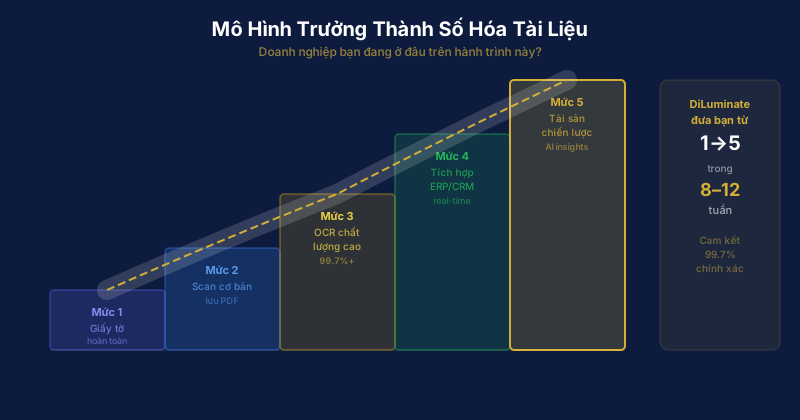
DiLuminate's enterprise digitization service is designed explicitly to reach Level 4 and Level 5 for clients who want more than just retrieval. Our process:
- Archive Assessment: We survey your entire document archive, categorize by type and strategic value, and prioritize digitization sequence.
- High-Accuracy Extraction: 99.7% OCR accuracy ensures the analytical data is reliable enough to make decisions on.
- Schema Design: We design extraction schemas that capture not just the obvious fields but the analytical attributes that enable intelligence — payment terms, escalation clauses, risk indicators.
- Integration and Analysis: Extracted data is delivered in formats ready for your analytics platform — or DiLuminate can provide analysis as a service.
- Insight Development: Our analysts help you identify the first three high-value intelligence patterns in your data and build the dashboards to monitor them ongoing.
Your Next Competitive Advantage Is Already Waiting
The strategic intelligence your competitors wish they had is sitting in your archive right now. The only barrier is making it readable. DiLuminate exists to remove that barrier — with the accuracy, integration capability, and analytical partnership to take you all the way from Level 1 to Level 5.
Contact DiLuminate today for a free Strategic Archive Assessment. We will identify the highest-value intelligence opportunities in your document archive and outline the path to unlocking them.